News@BDO
Datum:
The global automotive supply chain in Q2-2026 was defined by margin pressure, geopolitical volatility, and a major recalibration of electrification strategies. As OEMs adjusted to shifting consumer preferences and trade barriers, suppliers had to navigate several key market drivers.
Key market drivers in Q2-2026 were:
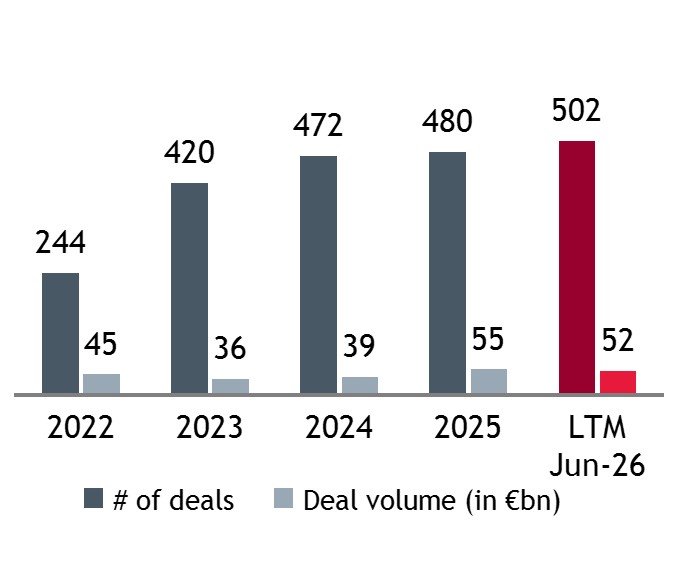
In Q2-2026, BDO observed a total of 116 transactions in the global automotive sector, which is slightly below with the previous quarters’ deal activity (130 in Q1-26, 126 in Q4-25).
Asian domestic deals made the largest contribution to Jun-26 YTD sector deal flow with a total of 92 transactions. European domestic transactions contributed 84 transactions, followed by North America with 33 transactions.
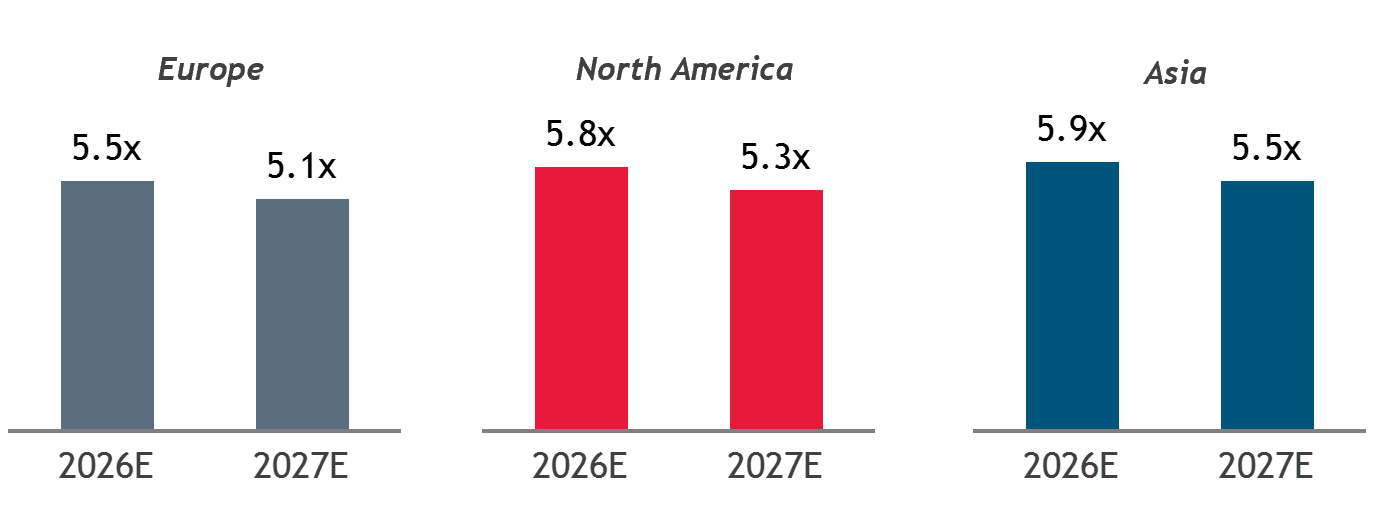
As per July 2026, European automotive suppliers trade at an implied EV/EBITDA 26E multiple of 5.5x (median-based) which is a moderate increase of 0.1x EV/EBITDA multiple points compared to 5.4x as per BDO’s Q1-2026 valuation analysis.
At the same time North American automotive suppliers’ valuation levels increased more dynamically. The implied EV/EBITDA 26E multiple is at 5.8x (median-based) in July 2026 compared to 5.5x as per our Q1-2026 automotive sector update.
APAC stock-listed automotive suppliers trade at an implied EV/EBITDA 26E multiple of 5.9x compared to 5.7x in the last quarter representing a small valuation increase of 0.2x EV/EBITDA multiple points.
In line with the observed mid-term historic trading pattern, North American stock-listed automotive suppliers continue to deliver share price outperformance over their European and Asian peers. Over the last three years, the North American automotive supplier peer group experienced a total share price appreciation of 89% compared to 34% of the APAC peer group and a negative 3% of European peers.
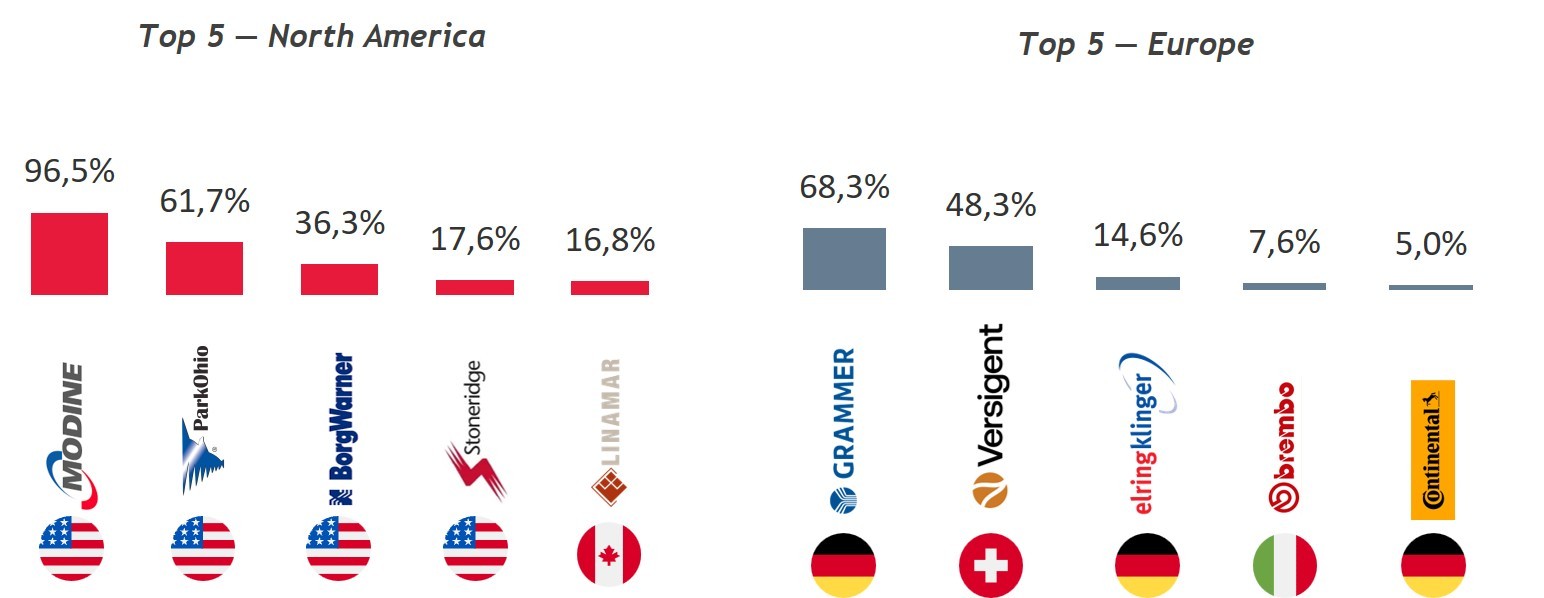
Within BDO’s European automotive supplier peer universe Grammer was the best performing share, rising by plus 68.3% over the last six months (as per July 2026). Grammer’s exceptional stock performance was primarily driven by its operational turnaround, operating margin improvement, and strong earnings execution in H1-2026.
Among key Grammer’s share price growth drivers were the success of Grammer's internal restructuring and efficiency programs implemented during 2024 and 2025 which paid major dividends, strong earnings momentum in mid-2026 with operating EBIT in Q2-2026 doubling year-over-year, operational margin expansion and resilience of Grammer's Seating Systems segment (which provides high-margin driver seats for agricultural machinery, commercial trucks, and forklifts).
The electrification trend of the EU’s vehicle fleet continued with a total of 1,221k newly registered BEVs in H1-2026. Total BEV registrations in the EU in H1-2026 rose by +352k (+41%) compared to H1-2025.
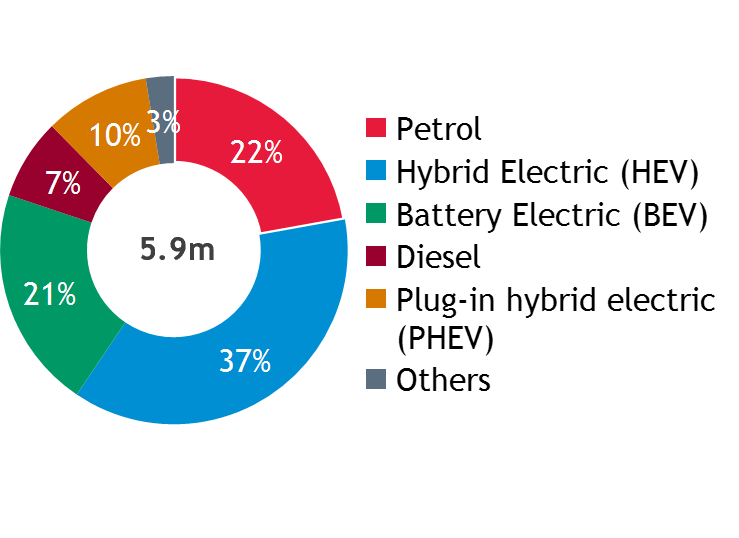
In H1-2026, HEVs led the charts with a 37% share of all EU car registrations, followed by petrol (22%), BEVs (21%), PHEV (10%) and diesel (8%).
New car registrations of ICE cars remain very relevant but continue to steadily decline. Monthly petrol type registrations were down -12.4% y-o-y to 245k, diesel type registrations decreased by -16.1% y-o-y to 77k).
Among the larger EU markets, German car registrations increased moderately by +5.8% compared to H1-2025 but showed a significant increase in BEV registrations (+119k units or +48% to now 368k per H1-2026), underlining a shift in consumer sentiment and reflecting recent oil price volatility.